1. Open calculator in windows as usual, than choose Help --> Help Topics.
2.Then press question mark (?) at top left part of the Title Bar choose Jum to URL
3. Put any website address that you want to access, and happy browsing from your calculator.
Monday, June 14, 2010


Saturday, January 30, 2010
iPhone Hacker Says He's also Cracked PlayStation 3
The 20-year-old hacker best known for cracking Apple's iPhone says he's done it again, this time with Sony's PlayStation 3.
 In a Friday blog post, George Hotz said that after a five-week effort, he'd finally managed to run his own software on the PlayStation 3, which typically only plays digitally signed software that is approved by Sony. "I have read/write access to the entire system memory, and [hypervisor] level access to the processor," he wrote. "In other words, I have hacked the PS3."
He pulled off the feat using "very simple hardware, cleverly applied, and some not so simple software," he added.
Hotz received widespread media attention in 2007 when he developed a technique that allowed the iPhone to run on any wireless network. In the U.S., iPhones are sold exclusively for use with AT&T's network.
Hotz's new technique could allow PlayStation 3 users to run new, unauthorized software on their systems. Such software could include the Linux operating system or older PlayStation 2 games, which don't work on the PlayStation 3. But the hack could also give gamers a way to run pirated software on their systems too.
PlayStation fans will have to wait some time before they get to see Hotz's code, however. In his blog post, he said he isn't revealing how he pulled off his trick just yet, in part because he's worried that Sony may find a way to disable his technique.
That's what Apple tried to do with the Jailbreak hack. The company has repeatedly disabled the Jailbreak code in software updates to its devices, but hackers have responded each time with new techniques to keep the phones unlocked.
Hotz did say that he was hoping to find and publish the device's decryption keys, which could help others develop and run unauthorized software for the machines.
Apple's iPad Plays Games, Surprise!
Call Apple's tablet the iPad, because that's what Steve Jobs does, and hey, it can play games! Thank goodness, right? Apple's iPhone didn't for years, and even Apple probably realizes what an embarrassing mistake that was.It also packs in 802.11n WiFi, Bluetooth 2.1 + EDR, a speaker and mic, a compass and an accelerometer, and retails in its most basic configuration for just $499
.
So while my colleagues are poring over its ramifications in dozens of other areas, let's talk about the iPad and gaming, or at least what Apple wants us to take away from the media circus that's wrapping up as I type this. For starters, it's extremely thin and light, which means three things: It'll be a delight to tote, perhaps a trifle vulnerable if dropped or caught between heavy objects, and--yep, it'll have pretty abysmal battery life.
Apple claims 10 hours battery life, which you can already assume is like the EPA's mileage estimates for cars (read: Not so much). In fact at least one beta tester who had the thing for the last 10 days apparently estimates it's more like three hours if you're running a game full-out.
That's still notably better than a serious gaming laptop (by comparison, my eight-pounder runs for an hour, cordless, tops) but dramatically less than the Nintendo DS or Sony PSP, which can either approach or exceed 10. For example, my PSP 3000 with the 2200 mAh battery upgrade almost gets me across the pond and back--Detroit to London to Detroit--on a single charge.
Under the iPad's hood, you're looking at a 1GHz Apple A3 chip, basically an all-in-one processor that handles core crunching as well as audio-video math processing typically reserved for discrete silicon. You don't get much in the way of storage, though. Apple says between 16 and 64 GB of flash storage internal, which means--sorry Blizzard wonks--you won't be running anything like World of Warcraft on it.
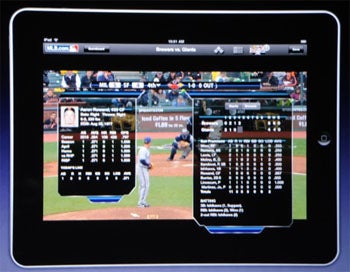
As for how you control the thing, it's gesture-driven, just like the iPhone, so think "super-sized" mobile and you've got the essence of what Apple's up to from a gaming angle. In fact the iPad can download and run nearly any iPhone app out of the box. Apple demonstrated an iPhone racing game running at a 1-to-1 pixel ratio center-screen (about a quarter active space, the rest framed by black) then showed how the iPad could interpolate the pixels to run at about two-thirds screen size. It looked a little blurry, and harked back to what console gamers were doing a generation ago, but I'm convinced Apple's not courting the high end at this point.
How does it handle in games? As noted, it's basically a giant iPhone, so you're using gestures or tapping on hot points to execute actions. Imagine swishing your fingers across the screen to fling a grenade, or using three fingers on screen at once to open a door. (Apple's apparently familiar with sci-fi author Orson Scott Card, since they're describing more or less how the school tablets work in Card's Hugo and Nebula winner, Ender's Game.)
The screen sounds like the sweetest aspect, an in-plane switching 9.7-inch LED, which makes for a brighter, better display, but uses more power than a standard TFT setup. Form over function? Maybe. It wouldn't be the first time Apple swapped substance for style.
The bottom line? If you're a casual gamer, say someone who fiddles with stuff on your iPhone between meetings (or during them) or on planes or in line waiting for movie tickets, think of this as a kind of middle-ground between your phone and your laptop. You want to play slightly more sophisticated games on a multiple-use computing device and don't mind using a gesture-driven, non-deterministic interface to do so? Here's your new toy.
The rest of you? Wait for someone to bring the killer apps, because at least from a gaming angle, what Apple demonstrated at today's show was just an evolutionary extension of its i-brand family.
Little Glance At iPad
The iPad underwhelms in terms of hardware and software, but there’s a lot of potential for innovative content.
Hardware: Awkward to handle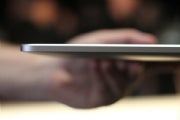 While the iPad is super slim at only a half-inch thick, I had some difficulty handling it. At 1.5 pounds, it is too heavy to hold in one hand, which is troublesome if you plan on using it as an e-reader. Other e-readers, like Amazon's Kindle 2 or the COOL-ER e-reader, are much lighter in hand and therefore make for a much more comfortable user experience. Using two hands is much more comfortable, but if you're reading a long novel, that could get quite tiresome.
Compared side-by-side, the iPad's 9.7-inch 1024-by-768-pixel LED-backlit display appeared dimmer than my iPhone 3G's (auto-brightness disabled, brightness set to maximum). Whites, in particular, looked much brighter on my iPhone. Apple had no comment, however, when I inquired about the difference. Although, one Apple spokesperson pointed out that a phone--which we expect to use outdoors as easily as indoors--might need to be brighter.
iPad OS: A giant iPhone interface
One of the biggest rumors leading up to the event was that iPhone OS 4.0 would be released in conjunction with the iPad. Instead, the iPad is running iPhone OS 3.2 (which has not been released for actual iPhones yet).
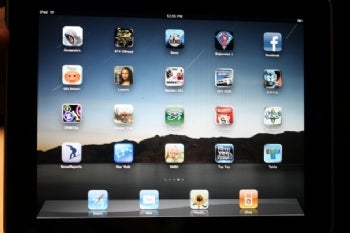 The lack of a fresh, new interface for the iPad is disappointing. There might be some incremental differences between versions 3.1 and 3.2, but to me on the surface, the iPad's interface looked exactly like a blown-up version of my iPhone 3GS'. And in my opinion, the OS doesn't translate very well from the much smaller iPhone 3G to the iPad. It's not so much about the touch aspect of the interface; in fact, navigating by touch is a huge benefit on this roomy screen, superior to, say, the joystick-based navigation of the comparably sized, non-touch Amazon Kindle DX screen. But images, icons, and text aren't as crisp as expected on the higher-resolution iPad. I found it much like watching standard definition video on an HDTV; Apple doesn't seem to have optimized the operating system's visuals for the iPad's display.
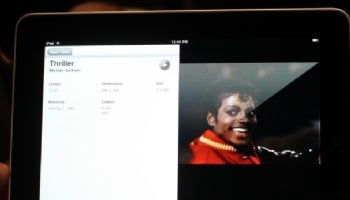 Because of the larger display, pretty much all of the native applications we're used to viewing on the iPhone look and function better on the iPad. Video playback, in particular, is stunning on the iPad, but we're disappointed by the lack of Flash support (though that exclusion wasn't exactly surprising, it remains a grievous omission).
 As a photo viewer, the iPad shines. Photos looked superb on the iPad's display, and it uses all of the familiar multitouch gestures (flick, pinch to zoom) found on the iPhone's photo app. The iPad's photo application is much better than the iPhone's, too, with on-the-fly slideshow creation (complete with transitions) and different ways of viewing the images (including sorting by places, people, events, and a mini-thumbnail bar at the bottom of the screen to jump quickly to other photos in the album). Unfortunately, the sorting capabilities will only work if you're using iPhoto--which means that those of who use any number of alternative imaging applications for the PC or the Mac (the majority of potential iPad users) are left in the dark with regard to those features.
Touch keyboard disappoints
 Like the rest of the OS, the touch keyboard is a larger version of the iPhone's. But unlike on the iPhone, the keyboard has no letter magnification when you press a key, and I found I missed this visual cue immensely. And unsurprisingly, it lacks haptic feedback (part of Android phones). You get no physical or visual feedback when you press a key and that's frustrating if you're trying to pound out a long e-mail. The experience, oddly, is akin to typing on the native Android OS' touch keyboard.
Using the keyboard in vertical mode, my small hands had difficulty maneuvering around the keyboard--my thumbs couldn't stretch across the whole device to reach the keys. Horizontal mode felt much more natural, but as a touch-typist, I still made more errors than I would with a physical keyboard.
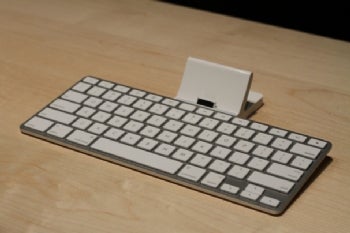 Apple will be offering a keyboard dock accessory, which gives you an actual physical keyboard to work with ($69). You can also place it in the iPad Case ($39), which allows you to angle it slightly. This feels much more comfortable than just laying the tablet flat and typing. Both of these items are sold separately, though.
iPhone apps don't fly on iPad
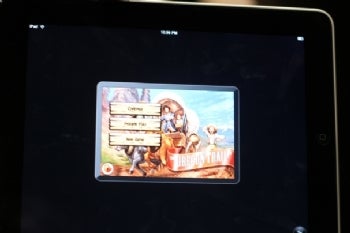 One of the big concerns among developers and users before the iPad's announcement was whether iPhone apps would work on the device. Thankfully, they do, but the experience isn't exactly ideal. You can either view an iPhone app as a small window or doubled to fill the display. I demoed the Assassin's Creed and Oregon Trail apps, and was put off by the obvious pixelation. Text in Facebook looked fuzzy, too.
Clearly, this an interim fix until actual apps are developed for the iPad. And I expect many app makers will create versions optimized for iPad. I see a lot of gaming potential for the iPad, but cool 3D graphics game like Assassins Creed just doesn't work on the iPad.
Luckily, the iPad isn't shipping for another 60 days, so hopefully more content will be developed by then. And who knows? Some of the issues I've noticed on this demo unit may be fixed by then.
Sunday, December 6, 2009
How to recover corrupted PowerPoint file using TEMP folder?
Today tip will help you to recover the unreadable and corrupted file of Microsoft PowerPoint. Normally PowerPoint open files can become corrupted when you are trying to save it or if you were working on it and your PowerPoint application or windows crashed due to power failure. Windows saves a duplicate copy of working file as a temporary version. There is no need to use any third party software to manage these types of corrupted files, because you can recover them from TEMP folder.
Follow the given steps to recover the corrupted files in MS PowerPoint:
First click on Start button then click on Search option to start your search process.

Here type the *.TMP in "All or part of the file name" box then choose the "Local Hard Drives" option in "Look in" box.

Now click on Search button to start the search process of temporary files on your system local drives.
After some time, windows locate the list to temporary files. Here arrange the all temp files as Date modified.

Now open the PowerPoint and try to open these temp files or double click on that file to run in PowerPoint.
8 Tips for Safer Online Shopping
The holiday season is upon us, and now more than ever that means shopping on the Internet.
This past Black Friday saw $595 million in online sales, an 11 percent increase compared to Black Friday 2008, according to online market tracker comScore.
But with the comfort and convenience of buying presents from your couch comes with security risks that even the most vigilant shopper can take for granted.
The browser used to be just a place to access Web pages, but as more people makes financial transactions and store personal data there, the security of browsers has become vital to consumers at home and IT managers at the office.
[ For complete coverage on Microsoft's new Windows 7 operating system -- including hands-on reviews, video tutorials and advice on enterprise rollouts -- see CIO.com's Windows 7 Bible. ]
Microsoft has offered up tips on how to fortify your browser against viruses, spam and malware.
Naturally, Microsoft would prefer you use Internet Explorer 8, although it's worth noting that Internet Explorer has been losing market share throughout 2009, and Mozilla's Firefox, Apple's Safari and Google's browser Chrome all have security features of their own.
Internet Explorer 8: Five Security Features for Enterprise Users
Internet Explorer currently has 63.6 percent of the browser market share, a six percent drop from January 2009, according to Web metrics company Net Applications.
Here are eight (as in Internet Explorer 8. Get it?) ways to have a safer time shopping online.
Keep your computer's software and browser current. Microsoft's Download Center is a good place to start.
Protect your computer with firewall, antivirus, antispam and antispyware software. Click here for a list of security software providers.
Beware of phishing scams and malware. IE8's SmartScreen Filter feature alerts users if a Web site you are trying to access has been reported as unsafe and allows you to report any unsafe sites you find. SmartScreen Filter and other security features can be accessed in IE8 under the Safety tab in the upper right hand corner.
Protect yourself against cross-site scripting attacks. Cross-site scripting, or XSS, attacks allow malicious code to be injected into Web pages that can lead to identity theft. What's most unsettling about XSS: everything looks normal to the user while unauthorized access is being given to a hacker and sensitive data is being stolen. IE8 has a built-in XSS Filter that is always on.
Identify Fake Web Addresses. By highlighting the domain name of a Web address in black, IE8 makes it easier to see a site's true identity, thus avoiding getting fooled by a deceptive Web site.
Browse more privately. The InPrivate Browsing option in IE8, located under Tools, allows you to surf the Web without the browser storing data about your session. Temporary Internet Files, Web address history, cookies and passwords are all disabled.
Make Sure Payment Web sites Use Encryption. Any Web site that processes credit card information must use encryption. To make sure of this, look for: An "s" after http in the Web address - it should read https; a closed padlock icon in the address bar or at the lower-right corner of the browser window; a green address bar - IE8 uses green to indicate a trustworthy site.
Never Respond to Unsolicited Requests to Update Your Account Information. An e-mail asking to update account information might be a scam for stealing your identity. Legitimate companies never send unsolicited e-mail or instant message requests for your passwords or other personal information.
http://www.pcworld.com/article/183518/8_tips_for_safer_online_shopping.html
This past Black Friday saw $595 million in online sales, an 11 percent increase compared to Black Friday 2008, according to online market tracker comScore.
But with the comfort and convenience of buying presents from your couch comes with security risks that even the most vigilant shopper can take for granted.
The browser used to be just a place to access Web pages, but as more people makes financial transactions and store personal data there, the security of browsers has become vital to consumers at home and IT managers at the office.
[ For complete coverage on Microsoft's new Windows 7 operating system -- including hands-on reviews, video tutorials and advice on enterprise rollouts -- see CIO.com's Windows 7 Bible. ]
Microsoft has offered up tips on how to fortify your browser against viruses, spam and malware.
Naturally, Microsoft would prefer you use Internet Explorer 8, although it's worth noting that Internet Explorer has been losing market share throughout 2009, and Mozilla's Firefox, Apple's Safari and Google's browser Chrome all have security features of their own.
Internet Explorer 8: Five Security Features for Enterprise Users
Internet Explorer currently has 63.6 percent of the browser market share, a six percent drop from January 2009, according to Web metrics company Net Applications.
Here are eight (as in Internet Explorer 8. Get it?) ways to have a safer time shopping online.
Keep your computer's software and browser current. Microsoft's Download Center is a good place to start.
Protect your computer with firewall, antivirus, antispam and antispyware software. Click here for a list of security software providers.
Beware of phishing scams and malware. IE8's SmartScreen Filter feature alerts users if a Web site you are trying to access has been reported as unsafe and allows you to report any unsafe sites you find. SmartScreen Filter and other security features can be accessed in IE8 under the Safety tab in the upper right hand corner.
Protect yourself against cross-site scripting attacks. Cross-site scripting, or XSS, attacks allow malicious code to be injected into Web pages that can lead to identity theft. What's most unsettling about XSS: everything looks normal to the user while unauthorized access is being given to a hacker and sensitive data is being stolen. IE8 has a built-in XSS Filter that is always on.
Identify Fake Web Addresses. By highlighting the domain name of a Web address in black, IE8 makes it easier to see a site's true identity, thus avoiding getting fooled by a deceptive Web site.
Browse more privately. The InPrivate Browsing option in IE8, located under Tools, allows you to surf the Web without the browser storing data about your session. Temporary Internet Files, Web address history, cookies and passwords are all disabled.
Make Sure Payment Web sites Use Encryption. Any Web site that processes credit card information must use encryption. To make sure of this, look for: An "s" after http in the Web address - it should read https; a closed padlock icon in the address bar or at the lower-right corner of the browser window; a green address bar - IE8 uses green to indicate a trustworthy site.
Never Respond to Unsolicited Requests to Update Your Account Information. An e-mail asking to update account information might be a scam for stealing your identity. Legitimate companies never send unsolicited e-mail or instant message requests for your passwords or other personal information.
http://www.pcworld.com/article/183518/8_tips_for_safer_online_shopping.html
Saturday, November 28, 2009
Intel Core i9: Six Cores Of Speed
Intel's Core i9 chips won't hit the market for a few more months, but that hasn't stopped Polish site PCLab from putting the new 32-nanometer processor through its paces in a recent series of benchmark tests.
While testing the pre-release 2.8 GHz Gulftown chip, PCLab found a significant speed increase with certain applications. According to their report, certain resource-intensive tasks, such as editing video or 3D modelling, perform up to 50% faster than Intel's current I7 chip.
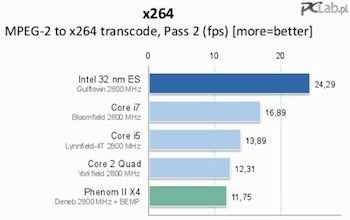
Unfortunately, the chip didn't shine in all areas; its performance is similar to that of older Core i7 chips when handling less demanding general activities.
However, the Core i9 CPUs fared well when it came to power usage, using less power and running cooler compared to older chips.
Subscribe to:
Posts (Atom)